 Image 1 of 1
Every major streaming platform normalizes playback to a loudness level measured in LUFS. Tracks that arrive above that level get turned down. Tracks that arrive below it may be turned up within available headroom. Delivering a louder master does not result in louder playback but in gain reduction.
These numbers are not targets to master to. They describe how playback is adjusted.
Knowing how normalization works changes how you approach the final stage. Instead of chasing maximum loudness, you’re deciding how your track behaves once it gets turned up or down.
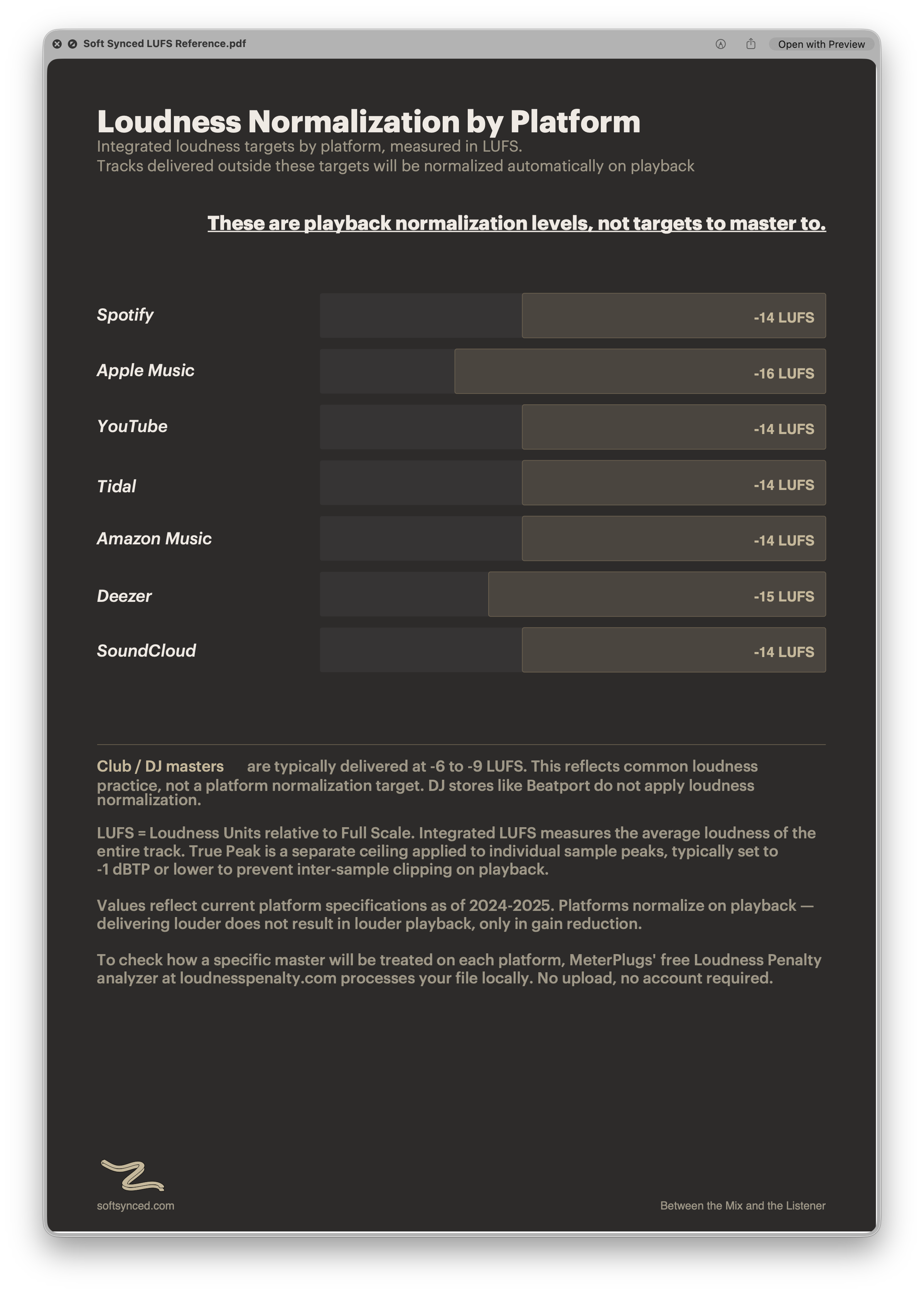
This chart shows the playback normalization levels for Spotify, Apple Music, YouTube, Tidal, Amazon Music, Deezer, and SoundCloud, along with typical True Peak ceilings. True Peak is separate from integrated loudness — it controls individual sample peaks, and setting it at -1 dBTP or lower helps prevent inter-sample clipping during encoding.
The chart also includes a note on Club and DJ masters, where the context is different and normalization does not apply. Treating Beatport the same as streaming platforms leads to the wrong decisions.
Every major streaming platform normalizes playback to a loudness level measured in LUFS. Tracks that arrive above that level get turned down. Tracks that arrive below it may be turned up within available headroom. Delivering a louder master does not result in louder playback but in gain reduction.
These numbers are not targets to master to. They describe how playback is adjusted.
Knowing how normalization works changes how you approach the final stage. Instead of chasing maximum loudness, you’re deciding how your track behaves once it gets turned up or down.
This chart shows the playback normalization levels for Spotify, Apple Music, YouTube, Tidal, Amazon Music, Deezer, and SoundCloud, along with typical True Peak ceilings. True Peak is separate from integrated loudness — it controls individual sample peaks, and setting it at -1 dBTP or lower helps prevent inter-sample clipping during encoding.
The chart also includes a note on Club and DJ masters, where the context is different and normalization does not apply. Treating Beatport the same as streaming platforms leads to the wrong decisions.