 Image 1 of 1
By the time a track reaches mastering, the mix has already been rendered down to a stereo file. The individual elements are combined into one signal. Every decision made at the mastering stage happens to everything at once. There is no isolating the bass from the vocal, or the snare from the reverb. Mastering works with what it receives.
Understanding what each stage of the chain is actually doing — and when it's warranted — changes how you use it. Reaching for a multiband compressor because it's in the chain is different from reaching for it because a specific frequency band is behaving differently from the rest. The same goes for saturation, stereo width processing, and the limiter.
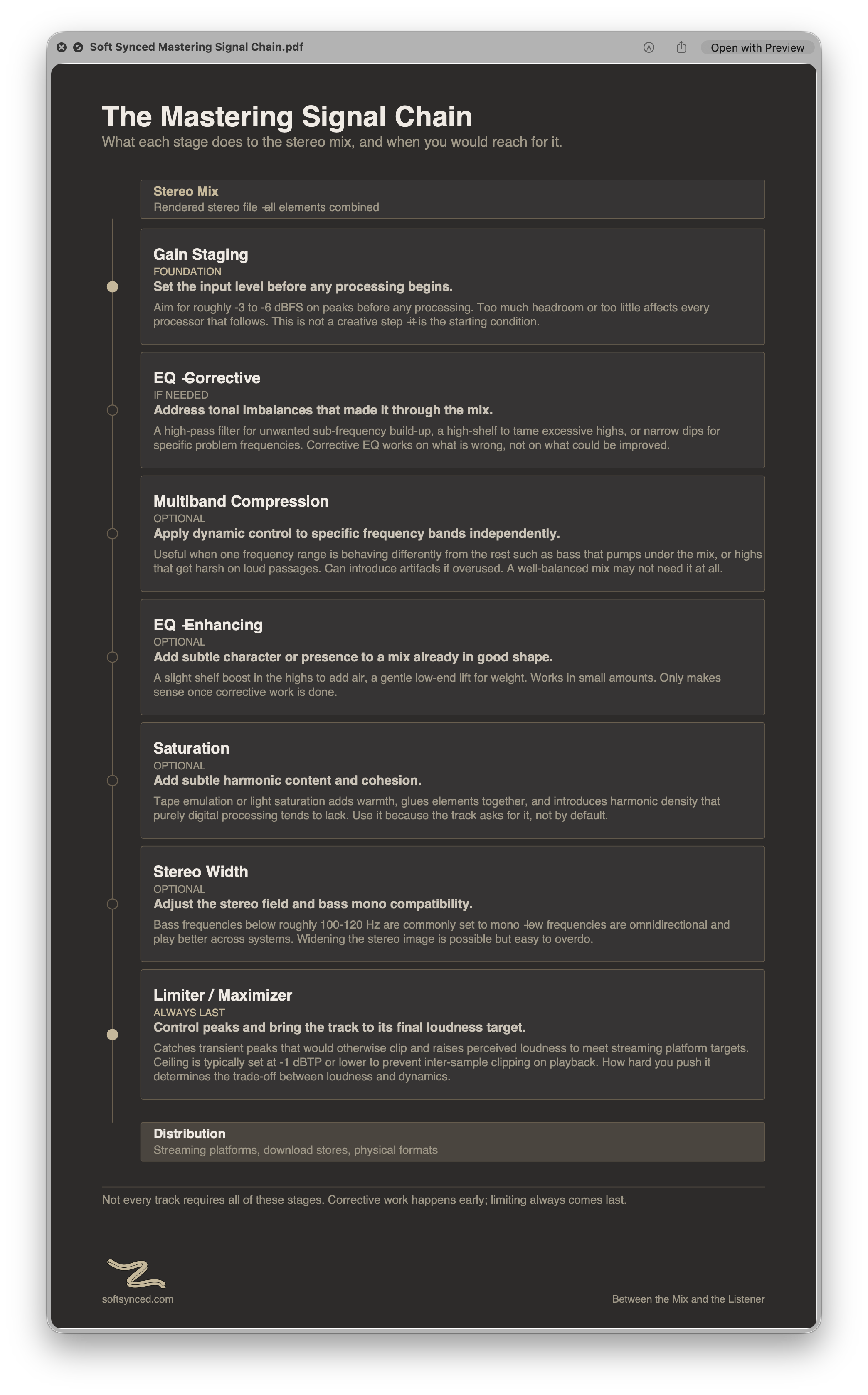
This chart maps the signal chain from stereo mix to distribution: gain staging, corrective EQ, multiband compression, enhancing EQ, saturation, stereo width, and limiting. Each stage is labeled by what it does to the signal and tagged by when you would actually reach for it — foundational, if needed, optional, or always last.
The distinction between corrective and enhancing treatment runs through the whole chain. Some tracks arrive needing correction. Others are already in good shape and only need a light enhancing pass. Most need some of both. The chain is the same either way, what changes is how much of it you actually use, and how hard you push each stage.
Not every track needs every stage. This chart is designed to help you make that call rather than defaulting to a full chain regardless of what the material asks for.
By the time a track reaches mastering, the mix has already been rendered down to a stereo file. The individual elements are combined into one signal. Every decision made at the mastering stage happens to everything at once. There is no isolating the bass from the vocal, or the snare from the reverb. Mastering works with what it receives.
Understanding what each stage of the chain is actually doing — and when it's warranted — changes how you use it. Reaching for a multiband compressor because it's in the chain is different from reaching for it because a specific frequency band is behaving differently from the rest. The same goes for saturation, stereo width processing, and the limiter.
This chart maps the signal chain from stereo mix to distribution: gain staging, corrective EQ, multiband compression, enhancing EQ, saturation, stereo width, and limiting. Each stage is labeled by what it does to the signal and tagged by when you would actually reach for it — foundational, if needed, optional, or always last.
The distinction between corrective and enhancing treatment runs through the whole chain. Some tracks arrive needing correction. Others are already in good shape and only need a light enhancing pass. Most need some of both. The chain is the same either way, what changes is how much of it you actually use, and how hard you push each stage.
Not every track needs every stage. This chart is designed to help you make that call rather than defaulting to a full chain regardless of what the material asks for.