 Image 1 of 1
There is a pass worth doing before you touch any processing, a diagnostic listen that tells you what the track actually needs at the mastering stage. Skipping it means making decisions without knowing what problem, if any, you're solving.
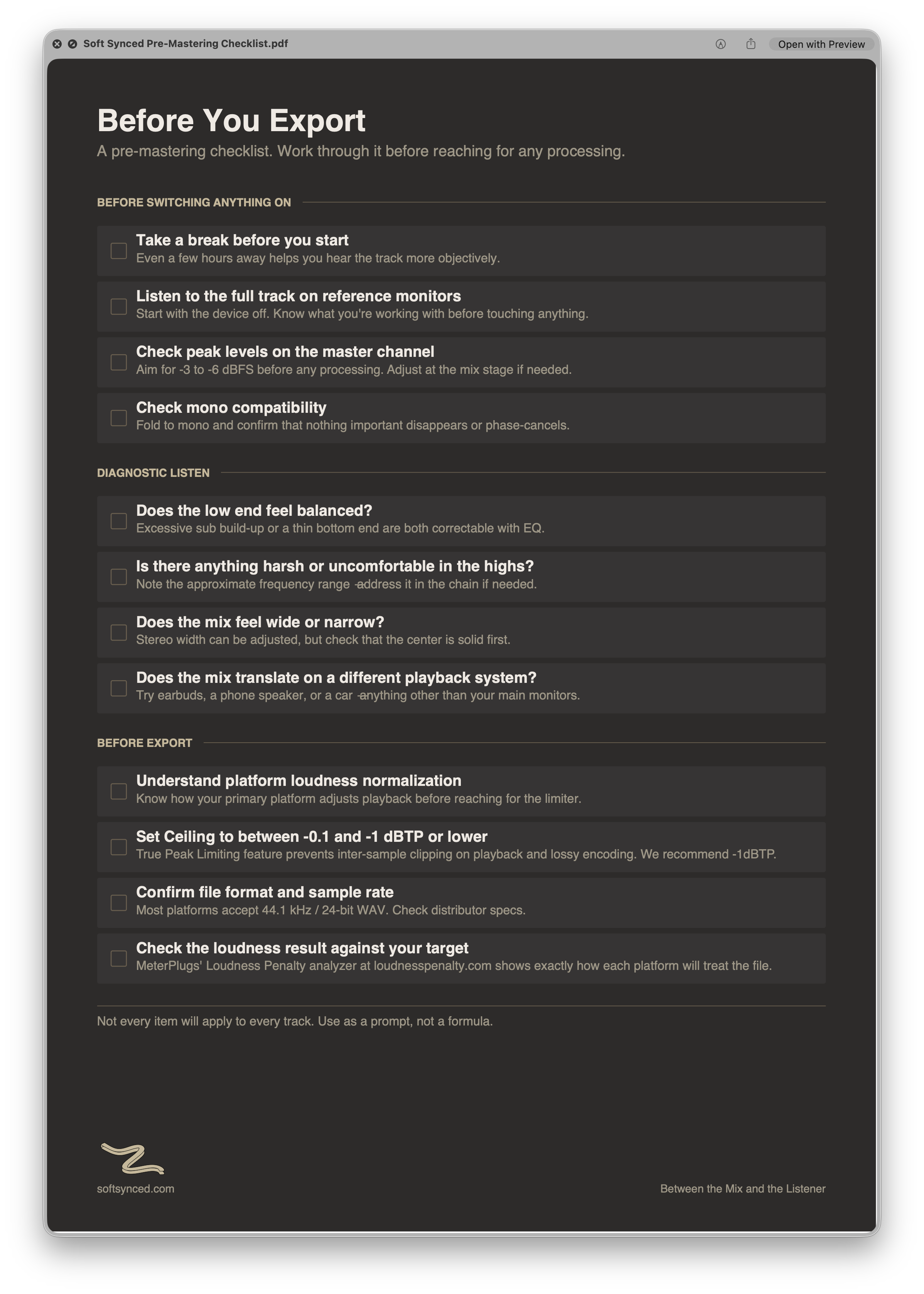
This checklist covers that pass in full. Twelve items across three stages: what to check before switching anything on, what to listen for during the diagnostic pass, and what to confirm before export.
The first stage covers the basics that affect everything that follows, taking time away from the mix before starting, checking peak levels on the master channel, and verifying mono compatibility. A mix that phase-cancels significantly in mono has a problem that no amount of mastering will fix.
The diagnostic listen stage is about identifying what the track needs before reaching for any tools. Low-end balance, high-frequency harshness, stereo width, and translation across different playback systems. A track that sounds right on studio monitors but falls apart on earbuds or a car speaker has a translation problem, and knowing that before you start shapes every decision in the chain.
The pre-export stage covers the technical requirements: platform loudness normalization, recommended use of the True Peak ceiling feature, file format, and a final check against playback behavior using tools like MeterPlugs’ Loudness Penalty analyzer.
Not every item will apply to every track. Use it as a prompt, not a formula. The tools available at the mastering stage are only useful once you know what you're reaching for them to do.
There is a pass worth doing before you touch any processing, a diagnostic listen that tells you what the track actually needs at the mastering stage. Skipping it means making decisions without knowing what problem, if any, you're solving.
This checklist covers that pass in full. Twelve items across three stages: what to check before switching anything on, what to listen for during the diagnostic pass, and what to confirm before export.
The first stage covers the basics that affect everything that follows, taking time away from the mix before starting, checking peak levels on the master channel, and verifying mono compatibility. A mix that phase-cancels significantly in mono has a problem that no amount of mastering will fix.
The diagnostic listen stage is about identifying what the track needs before reaching for any tools. Low-end balance, high-frequency harshness, stereo width, and translation across different playback systems. A track that sounds right on studio monitors but falls apart on earbuds or a car speaker has a translation problem, and knowing that before you start shapes every decision in the chain.
The pre-export stage covers the technical requirements: platform loudness normalization, recommended use of the True Peak ceiling feature, file format, and a final check against playback behavior using tools like MeterPlugs’ Loudness Penalty analyzer.
Not every item will apply to every track. Use it as a prompt, not a formula. The tools available at the mastering stage are only useful once you know what you're reaching for them to do.