
Why Your Loop Won't Develop
Soft Signal Episode 5.
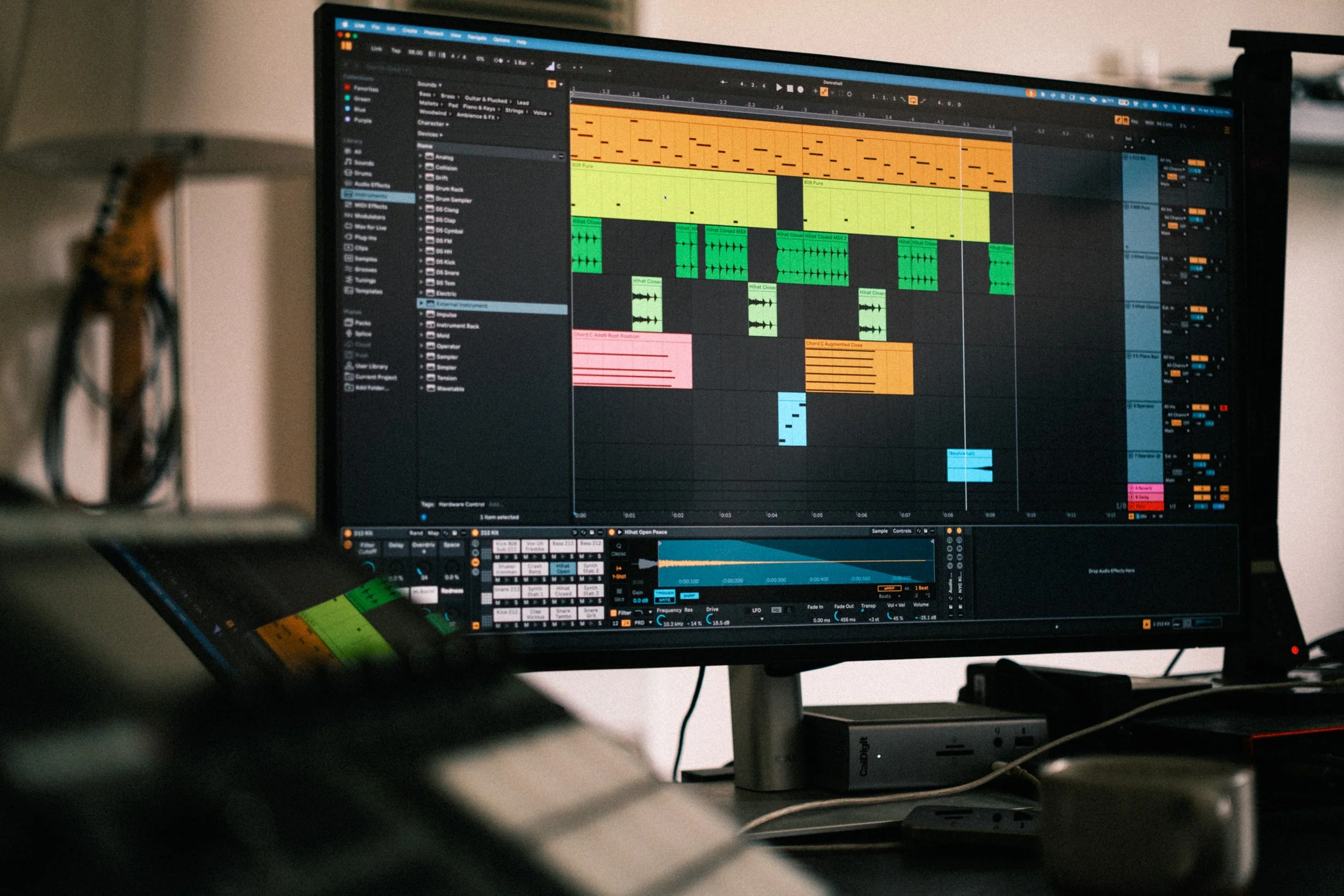
You have a loop that sounds right. You play it back and you're satisfied with where it is. So you try to push it forward, and nothing happens.
The Brain Files It
A loop that resolves back to bar one creates what psychologists call pattern closure. The brain registers a completed cycle, decides it understands what's happening, and moves on. By the time you try to arrange something you've been working on for an hour, your brain has processed that resolution hundreds of times. The loop feels finished because the brain has been treating it that way for a while.
Most arrangement advice skips past this entirely and goes straight to technique. Risers, drops, studied song structures. Those things are important. But they don't address why development feels genuinely difficult at the moment you sit down to do it.
What Arrangement Requires
An arrangement is a loop that changes over time. Elements appear. Others drop. A section that was dense opens up. Something withheld finally arrives.
What makes an arrangement work is the same thing that makes a conversation worth following.
It doesn’t give you everything at once. It unfolds. Information arrives in sequence, creates expectation, and either meets it or doesn’t. Deciding when things change is the work, and every one of those changes is a decision that carries the same risk: you might move away from what was working. That feeling doesn't disappear with more experience. It's just part of what the work requires.
Three Things Worth Trying
1. Work Backwards From the Drop
Sliding the loop forward is one of the simplest ideas I keep coming back to.
Take the loop and move it to bar 33 or bar 49. Leave the space before it empty.
Then work backwards.
The empty timeline creates a problem that has to be solved. Instead of asking what do I add to this, you're asking how do I get here.
2. Reverse-Engineer the Structure You Already Trust
Studying how arrangements you already know actually move is also worth the time.
Import a track into your DAW.
Drop markers at each section change and look at the lengths before you listen.
How long is the intro? When does the main element enter? How often does something significant shift?
Arrangements that feel effortless usually follow a shape.
Seeing it laid out visually is different information from experiencing it as a listener.
Use this to work through it:
softsynced.com
Multiple clicks on the same section will number them (Verse 1, Verse 2…). Drag rows to reorder.
3. Separate Structure From Sound
The third is doing the shape work away from the session entirely.
Draw a line on paper. That's time.
Mark where energy builds, where it drops, roughly how many times that cycle happens.
What you're doing is making a structural decision before making sound decisions, and those two things are easier to separate on paper than inside an open project.
A bad sketch takes two minutes to fix. A bad arrangement takes two hours.
The Energy Curve
One more thing that's useful to understand before going back to a stalled loop: listener fatigue is real. A section that stays dense for too long stops feeling dense. The ear adjusts and the impact flattens. The drop lands harder because of what was withheld before it. The breakdown has weight because of what follows it. An arrangement that never changes energy doesn't feel consistent. It just feels flat.
Knowing that changes what you're sketching for.
Use this before your next session:
softsynced.com